
Fillings, Crowns & Bridges in Stratford
Do you lack confidence because of your smile? Visit our dentist for restorative services such as fillings, crowns, bridges and bonding to restore your smile and rebuild your confidence.
What Is a Dental Filling?
A tooth filling is the most common way for dentists to treat a cavity. It involves removing the decay and filling the tooth with safe materials that restore the tooth shape and function. It also improves the appearance of the tooth. Contact our office to learn more.
What Are Crowns and Bridges for Teeth?
Crowns for teeth are tooth-shaped covers that dentists place over damaged teeth. Also called dental caps, they protect your teeth from decay and make them stronger.
Dental bridges for teeth actually bridge the gaps that missing teeth leave behind. A bridge also will prevent your other teeth from shifting out of place. The crown on each end acts as an anchor for the artificial tooth in the center. A 3-point bridge involves two anchor teeth and the artificial tooth in the middle. A 4-point bridge involves two anchor teeth and two artificial teeth in the middle. Our dentist in Stratford can also create longer bridges.
Which Type of Dental Professional Provides Restorative Services?
General dentists can provide dental fillings, crowns and bridges. Other types of restorative services include dentures, partial dentures, and dental implants. Call our practice to schedule a consultation for restorative dental services.
What Do Fillings, Crowns and Bridges Cost?
Your tooth filling cost will depend on the material that you choose to use and the number of cavities that you have. Similarly, your dental bridge cost and dental crown cost will be based on the materials that you choose and the number of teeth involved. You can find out more about our prices when you call our office.
Tooth-Colored, Metal-Free Fillings
Sometimes a routine filling will repair a damaged tooth, but may negatively affect your smile. The standard fillings for the last few decades have been silver or metal. Called amalgam fillings, these contained mercury, silver, tin, and other metals. Over time the color darkens even more and many patients have been wondering about more natural looking options.
For more than 20 years, our doctors at Lighthouse Dental Care have used white, composite resin fillings to repair teeth. Composite fillings bond to the tooth and becomes part of it which means that it will never fall out or get loose. An additional advantage of this bonding is that there is no risk of bacteria making their way between the tooth and the filling. Plus, the white fillings will match the color of the rest of your teeth easily.
Dental Crown Types
Dental crowns are recommended for use for a variety of different reasons. Typically, it’s used to repair a tooth that is cracked, broken, or damaged by decay. Dental crowns improve the ability to chew and improve overall mouth function. Crowns used to be made out of gold or semi-precious metals, but they showed in the mouth and were not aesthetically pleasing. Now, most people choose to get a ceramic or porcelain crown that is tooth-colored.
Lighthouse Dental Care is pleased to offer white crowns that are color-matched to your teeth. Our metal-free crowns are strong, durable, and translucent so they look and feel just like your natural teeth.
Dental Bridge Types
If you need a tooth bridge, you have a choice between three main types. The standard bridge has a cap on each end that covers the two natural teeth on each side of your missing tooth. The caps act as the support for the fake tooth. The cantilever bridge has one fake tooth and one cap to cover a real tooth for support.
The Maryland bridge has an artificial tooth and a metal band. The dentist uses a resin cement to attach the band to the backs of the fake tooth and two real teeth on each side. However, it’s not as strong as a standard bridge and is the best fit for front teeth. Talk to our dentist about which type is right for you.
Getting a tooth bridge follows the same process as getting a crown. The dentist will make sure that your tooth can support the bridge before preparing it and making an impression for the dental lab. When you return to the office, your bridge will be ready for the dentist to attach to your teeth.
Correcting the Teeth: What Is Dental Bonding and When Is It Right for You?
When it comes to corrective and cosmetic dental procedures, practices like our own Lighthouse Dental Care provide many solutions for patients. These procedures can range in their need and when they are recommended. Some, however, are more involved than others while certain processes are simple and highly recommended. Dental bonding is the latter. Though common, with millions of Americans having received this procedure on at least one tooth, it is not always understood. Therefore, the following are the details of dental bonding and what it involves to help you make the right choice for your teeth and your smile.
What Does Dental Bonding Involve?
Dental bonding is a quick but multi-step process that helps to restore the teeth to an aesthetically pleasing and natural look. Usually, this process is completed in the dental office during a single visit. This, however, can vary based upon the number of teeth needing dental bonding or the extent of the reparation required.
The preparation time for dental bonding procedures is not highly involved. For the most common and easiest of cases, dental bonding does not require the use of anesthesia, unless the patient requires it for another reason. Once in the dental chair, a dentist will choose the bonding color. This is done using a guide that provides colors of composites and will help the dentist to match the color to the others in the mouth in order to ensure uniformity.
Utilizing sanding tools, a dentist like our own Dr. Mark Samuels will roughen the surface of the tooth or teeth. This helps with adherence of the dental resin composition and the conditioning substance. Once roughened, a liquid will be applied that helps to condition the tooth and prepare it for the bonding agent. The bonding agent is like a putty and is made of resin that is applied to the tooth. From there, the dental professional will mold the tooth in the proper way and help to ensure that it is the right shape for the mouth. Then, an ultraviolet light will be applied to the tooth essentially sealing it and ensuring that it hardens. This is the complete dental bonding process and will likely last between forty-five minutes to an hour for each of the teeth being bonded.
What Problems Does Dental Bonding Solve?
Knowing what a dental process involves and knowing what it can help resolve are two very different things. Therefore, now that you know and understand what dental bonding is, the next step is to really understand what it is used for and why dental bonding may be recommended by a dental professional. Dental bonding can be used to restore and repair teeth that have been damaged. This damage can be the result of normal wear and tear, dental decay, or it maybe the result of a chipped tooth or one that is cracked. Outside trauma or patient negligence, then, may result in the need and recommendation of dental bonding.
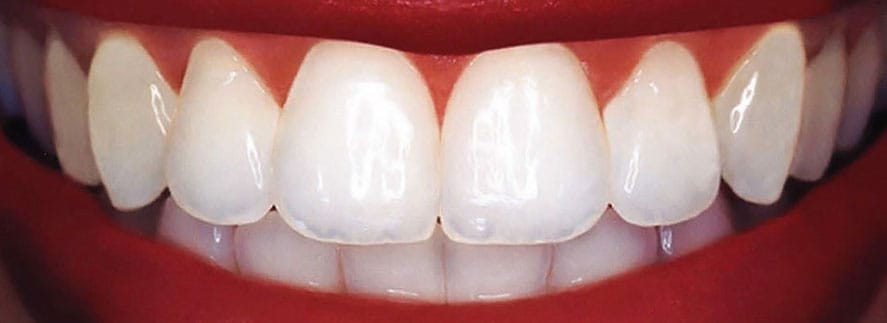
Finally, gum recession issues and gum disease may require dental bonding as well. In these cases, an actual tooth root may become exposed due to dental disease, causing pain and sensitivity. Dental bonding, then, may be recommended as a solution to cover the exposed root and help to alleviate discomfort and pain.
What are the Advantages and Disadvantages of Dental Bonding?
Dental bonding has many advantages. It is quickly accomplished and requires less prep time and follow-up visits than other procedures like dental veneers and Lumineers. It also does not remove any of the important tooth enamel that is often required for other cosmetic procedures. However, dental bonding agents and materials tend not to be stain resistant, meaning that applications may require maintenance and corrective updates down the road.
Where to Go for Dental Bonding?
While most dentists will provide some type of dental bonding, not all of these dentists provide the high quality that our Lighthouse Dental Care office will provide. Therefore, be sure to contact us for a consultation and for guidance on whether or not this procedure is right for you.
Call our dental practice at (203) 742-1027 for more information and to schedule a consultation.
Dental Care Service
- Tooth Bridge
- Connecticut General Dental Insurance
- Dental Treatment Offers
- Full Service Dentist Near Me
- Total Freedom Dental Implants Cost
- Milford CT Dentist List
- Digital X Ray
- Dentures Near Me
Popular Dental Services
- Short Term Braces
- Cosmetic Dentist
- Teeth Cleaned
- Dental Procedures that Require Sedation
- Get Braces
- Childrens Dentist Near Me
Trending Procedures
Ready to book an appointment?
Book a consultation today or make an appointment using our convenient online appointment scheduler.
Book appointment

Enjoy the flexibility of paying through monthly payments.
CareCredit is a healthcare credit card designed for your health and wellness.
Learn more

A discount plan available to keep you and your family healthy.
Everyone is accepted and membership can include coverage for your family.
Learn more